| Name | Group | Contact | |
|---|---|---|---|
|
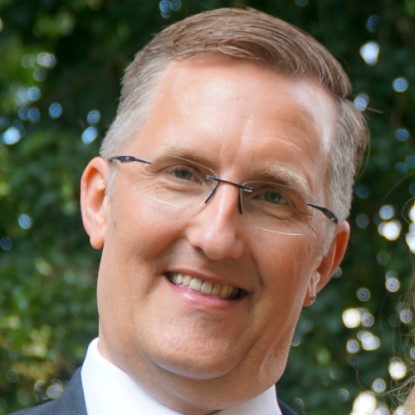
Apl. Prof.
Thomas Blochowicz | Structure and Dynamics of Amorphous Systems | thomas.blochowicz@physik.tu-... +49 6151 16-21601 |
|
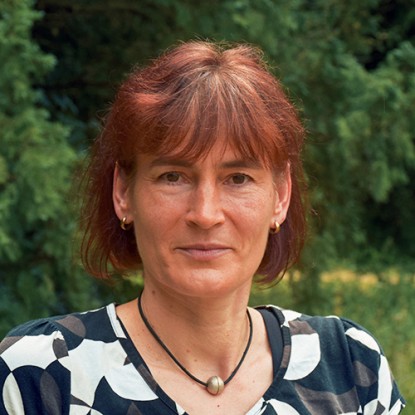
Prof. Dr.
Barbara Drossel | Theory of Complex Systems | drossel@pkm.tu-... +49 6151 16-21321 |

|
Prof. PhD.
Marco Durante | Radiation Biophysics, Biophysics Department (GSI Helmholtz Centre for Heavy Ion Research) | marco.durante@physik.tu-... 06159-71-2009 |

|
Prof. Dr.
Regine von Klitzing | Soft Matter at Interfaces | klitzing@smi.tu-... +49 6151 16-24506 |

|
Prof. Dr.
Benno Liebchen | Theory of Soft Matter | benno.liebchen@pkm.tu-... +49 6151 16-24509 |

|
Prof. Dr.
Emanuel Schneck | Soft Matter Biophysics | emanuel.schneck@pkm.tu-... +49 6151 16-20530 |

|
Prof. Dr.
Bernhard Urbaszek | Hybrid Quantum Systems | bernhard.urbaszek@pkm.tu-... +49 6151 16-21210 |
|
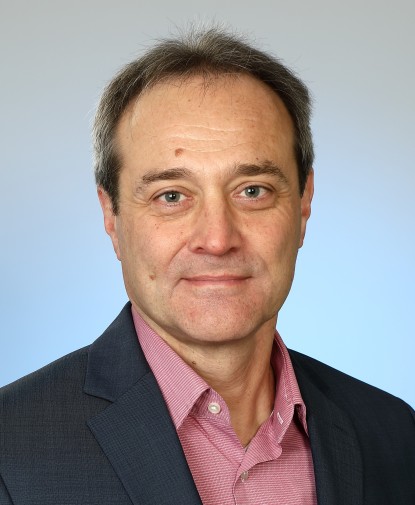
Prof. Dr.
Michael Vogel | Molecular Dynamics of Condensed Matter | michael.vogel@pkm.tu-... +49 6151 16-21500 |
Institute for Condensed Matter Physics (IPKM)
Our aim is the understanding and control of condensed matter with a focus on soft matter, complex systems and nano-structured materials for quantum and energy technologies. Systems of interest include polymers, amphiphiles, gels, colloidal dispersions, confined liquids, biomolecular materials, 2D materials, quantum dots and solid electrolytes. The IPKM is one of three institutes in the Department of Physics.
Focus on structural complexity
Condensed matter physics deals with fluids and solids composed of a macroscopic number of particles. In the past, the focus was on “hard” materials such as semiconductors and metals. In recent years, many researchers became interested in “soft” materials, and they are now the main research area of our Institute. Soft materials are for instance polymers, emulsions, gels, rubber, sediments, and many more, including biologically produced materials.
In contrast to hard materials, which are usually homogeneous on mesoscopic scales, soft materials are structured on different hierarchy levels, and they have a variety of different characteristic time scales. This complexity presents a great challenge to the scientific investigation. The aim is to understand the macroscopic properties such as viscosity, elasticity, electric conductivity, etc. and their dependence on external parameters (pressure, temperature) in terms of the microscopic structure. This requires not only the collaboration between experimental and theoretical physicists, but also with chemists, who can produce materials with a desired structure and composition, and with engineers, who are interested in the technological applications.
Research Groups
-
![]()
Structure and Dynamics of Amorphous Systems -
![]()
Theory of Complex Systems -
![]()
Radiation Biophysics -
![]()
Soft Matter at Interfaces -
![]()
Theory of Soft Matter -
![]()
Soft Matter Biophysics -
![]()
Hybrid Quantum Systems -
![]()
Molecular Dynamics of Condensed Matter -
![]()
Former groups
Contacts
IPKM Office
| Name | Group | Contact | |
|---|---|---|---|
|
|
Prof. Dr.
Emanuel Schneck | Soft Matter Biophysics | emanuel.schneck@pkm.tu-... +49 6151 16-20530 S2|04 105 |
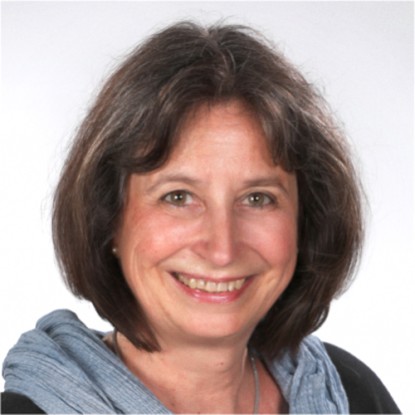
| Barbara Böttcher Administration | barbara.boettcher@pkm.tu-... +49 6151 16-21502 S2|07 81 |
-
![]() Picture: Paul Abendschein
![]() Picture: Paul Abendschein
Rhine-Main Universities successful in the Excellence Strategy
October 02, 2026
Funding serves to develop Frankfurt/Rhine-Main into a world-leading region of science
The Rhine-Main Universities (RMU) – the alliance of Goethe University Frankfurt, Johannes Gutenberg University Mainz and Technical University of Darmstadt – will receive funding in the high millions from 2027 as a University Excellence Consortium in the Excellence Strategy of the German federal and state governments. The alliance is now part of the twelve individual universities and three university alliances in Germany that have been awarded the title of University of Excellence. The RMU receive additional long-term funding from the federal government and from the states of Hesse and Rhineland-Palatinate for their ambitious strategy to develop Frankfurt/Rhine-Main into a world-leading academic hub.
-
![]()
![]()
Department bids farewell to Prof. Barbara Drossel
October 01, 2026
After almost 25 years at the Department of Physics, Prof. Dr Barbara Drossel retired on 30 September 2026. As a researcher, lecturer and colleague, she has left a lasting mark on the department and the Institute for Condensed Matter Physics.
-
![]()
![]()
Newsletter: Die neue Ausgabe ist da!
Oktober 01, 2026
Der Herbst bringt kürzere Tage, aber mit dem Fachbereich Physik jede Menge Gelegenheiten, Forschung live zu erleben.
Von Beobachtungen auf zwei Hemisphären bis zur Frage, wie kosmische Strahlung im Labor entsteht: Auch in den kommenden Monaten laden wir Sie herzlich ein, mit uns die Physik zu entdecken.
-
![]() Picture: Sai Shradha
![]() Picture: Sai Shradha
Bringing Hidden Optical Imperfections to Light
September 10, 2026
TU Darmstadt-led study published in “Nature Communications”
Tiny manufacturing imperfections in optical components normally go unnoticed. Yet they can alter light in surprisingly significant ways. An international research team led by TU Darmstadt has shown that such imperfections can affect not only polarization – the direction in which light oscillates – but also the spatial shape of a light beam. The findings, now published in “Nature Communications”, could help make sensitive optical measurements even more precise in the future.
-
![]() Picture: Pixelbuddha Studio | adobe.stock | Atieh Razavi
![]() Picture: Pixelbuddha Studio | adobe.stock | Atieh Razavi
Study: Tiny particles keep water jets stable for longer
September 08, 2026
Research team led by TU Darmstadt publishes findings in *Nature Communications*
Tiny, soft polymer particles – known as microgels – can help to stabilize extremely thin liquid jets. How this works is the finding of a study led by researchers at TU Darmstadt, which has now been published in the prestigious journal “Nature Communications”. The findings could be of interest for e.g. the development of needle-free medical injection systems.
-
![]()
![]()
Professor Regine von Klitzing becomes an honorary member of the ACIS scientific society
September 04, 2026
Professor Regine von Klitzing has been appointed as the first honorary member of the Australasian Colloid and Interface Society (ACIS). The honour is a great privilege and means a great deal to her, von Klitzing explained in a message of thanks to the ACIS.
-
![]()
![]()
Physik im Fokus: Der Fachbereich Physik in der aktuellen hoch³
August 18, 2026
Spitzenforschung, internationale Publikationen und wegweisende Themen aus dem Fachbereich Physik
Die neue Ausgabe der Universitätszeitung hoch³ 3/2026 ist erschienen und zeigt einmal mehr, wie vielfältig und zukunftsorientiert die Forschung am Fachbereich Physik der TU Darmstadt ist. Von aktueller Spitzenforschung und renommierten Publikationen über astronomische Beobachtungen und interdisziplinäre Forschung bis hin zu nachhaltigen Laboren reicht das Spektrum der Themen.
-
![]() Picture: Sai Shradha | AG Urbaszek
![]() Picture: Sai Shradha | AG Urbaszek
Twisted magnets with memory
July 15, 2026
Study led by the Department of Physics at TU Darmstadt published in “Nature Communications”
The properties of ultra-thin magnets can be specifically altered by a minimal twist between two atomic monolayers. This is the conclusion reached by an international research team led by TU Darmstadt in a study that has now been published in the prestigious journal “Nature Communications”. The findings open up new prospects for future memory devices.
-
![]() Picture: AG Urbaszek
![]() Picture: AG Urbaszek
Quantum technology for energy-efficient sensors, storage systems and solar cells
July 10, 2026
The Department of Physics at TU Darmstadt is coordinating the new LOEWE priority area “QuEnergy”
Through a new research consortium led by TU Darmstadt, scientists aim to lay new foundations for energy-efficient quantum technologies. The LOEWE “QuEnergy” research initiative is being funded by the State of Hesse with 4.8 million euros over four years from 2027 on. This is a close collaboration between TU Darmstadt and Philipps University of Marburg.
-
![]() Bild: James Muchmore
![]() Bild: James Muchmore
Die erstaunliche Resilienz eines tropischen Regenwalds
Mai 04, 2026
Studie in Zusammenarbeit der Fachbereiche Physik und Biologie in „Nature“ veröffentlicht
Können sich gerodete Regenwälder erholen und verschwundene Tierarten zurückkehren? Diesen Fragen ging ein Forschungsteam im von der Deutschen Forschungsgemeinschaft (DFG) geförderten Konsortium „Reassembly“ nach – mit erfreulichen Ergebnissen.


Events
-
2026/10/12,
13:00-17:00M+M Symposium
Physics for Health
Advanced nuclear physics methods in the production and application of medical radionuclides, current research on heavy-ion biophysics and its translation into cutting-edge hadron therapy for cancer tr…

-
2026/10/14,
12:30-13:30Gender in Research: What Does Feminism Have to Say to Physics?
Online Lecture Series- Transcending Boundaries: The Complexities of Gender in Research
Prof. Dr. Chanda Prescod-Weinstein Physics is often framed as a purely objective science and therefore immune to the social issues that shape human society. But of course, while the rest of the unive…

-
2026/10/21,
14:00-15:00Hochpräzise Röntgen-Spektroskopie – Neue Perspektiven für Atomphysik, Astrophysik und Metrologie
Ein Vortrag aus der Vortragsreihe "Wissenschaft für Alle" von FAIR und GSI
Referentin: Dr. Sonja Bernitt, GSI/FAIR/Helmholtz-Institut Jena Die GSI-Vortragsreihe "Wissenschaft für Alle" richtet sich an alle an aktueller Wissenschaft und Forschung interessierten Personen…

-
2026/11/06,
14:00-15:30Uncertainties in nuclear reactions: a Bayesian Perspective
Prof. Ph.D. Filomena Nunes, Michigan State University, USA
Nuclear reactions are the most versatile probe to study rare isotopes and therefore are an essential part of the experimental program at facilities such as FRIB. The planning and interpretation of rea…

-
2026/11/18,
14:00-15:00Vom Weltraum ins Labor – Kosmische Strahlung mit dem Teilchenbeschleuniger herstellen
Ein Vortrag aus der Vortragsreihe "Wissenschaft für Alle" von FAIR und GSI
Referent: Dr. Tim Wagner, GSI/FAIR Die GSI-Vortragsreihe "Wissenschaft für Alle" richtet sich an alle an aktueller Wissenschaft und Forschung interessierten Personen. Die Themen decken ein gro&#…

-
2026/12/09,
14:00-15:00Wer strahlte denn da? – Einblick in den wissenschaftlichen Experimentierbetrieb an GSI/FAIR in 2026
Ein Vortrag aus der Vortragsreihe "Wissenschaft für Alle" von FAIR und GSI
Referent: Dr. Daniel Severin, GSI/FAIR, et al. Die GSI-Vortragsreihe "Wissenschaft für Alle" richtet sich an alle an aktueller Wissenschaft und Forschung interessierten Personen. Die Themen deck…

-
2027/02/05,
14:00-15:30Physik des Schaums
PhD Wiebke Drenckhan, Strasbourg, Institut Charles Sadorn

Jobs
Unsolicited applications
To job offers at the research groups
No job postings or not your topic? Feel free to contact the group leaders directly to discuss current opportunities. Your application is always welcome
Technical University of Darmstadt
Institute for Condensed Matter Physics
Hochschulstr. 6–8
64289 Darmstadt